Learning Across Cultures: International Collaborative Class on Global Intercultural Communication with English Literature at UNESA Campus 5
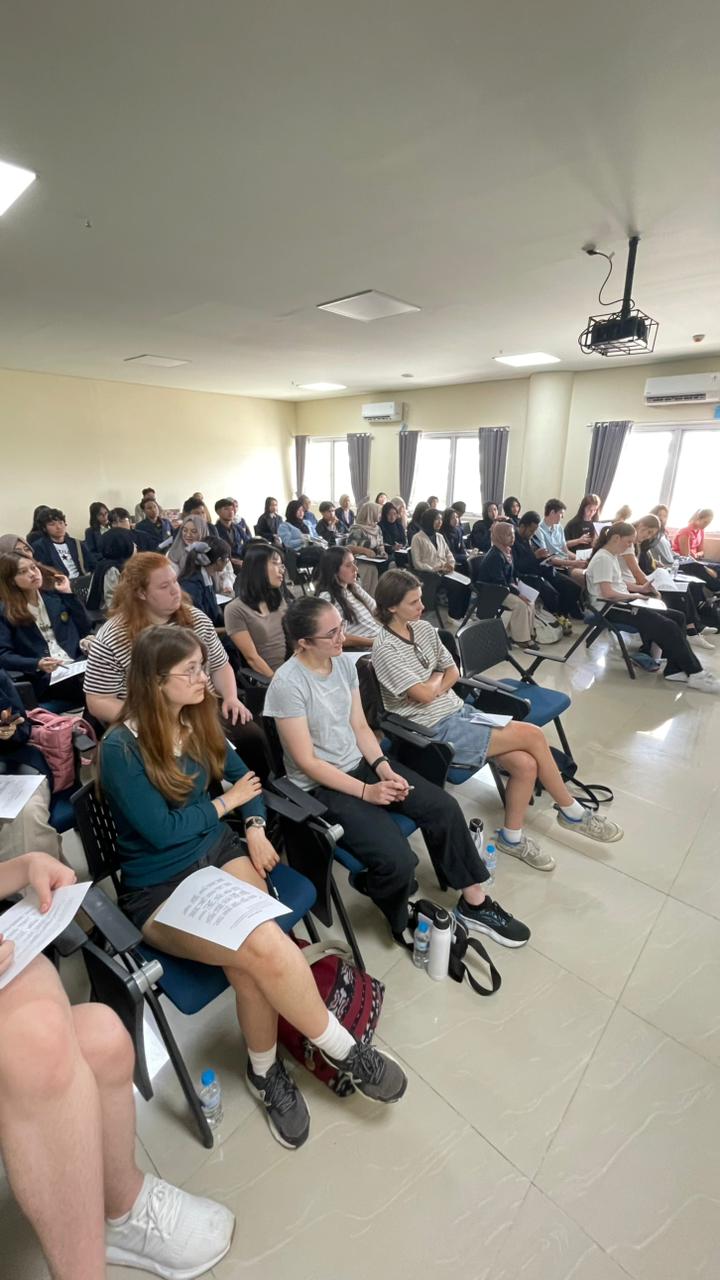
5th of February 2026- UNESA Campus 5 further strengthened its international academic engagement by organizing an International Collaborative Class under the International Inbound Program in collaboration with The University of Sydney. The activity was conducted in partnership with the English Literature Study Program, highlighting the role of humanities in fostering intercultural understanding and global perspectives.
The collaborative class was held as part of the course Global Intercultural Communication, facilitated by Ms. Wirdatul Khasanah, M.A., and involved 16 students from the University of Sydney alongside students from the English Literature Study Program at UNESA Campus 5. The session brought together students from diverse cultural and academic backgrounds in an inclusive international classroom environment.
The learning design emphasized experiential and dialogic approaches rather than conventional lectures. Students were organized into mixed groups, combining participants from both institutions. Within these groups, students shared and discussed their cultural identities, including traditions, social values, communication styles, and everyday cultural practices in their respective contexts.
Through guided discussion and storytelling, students explored how culture influences language use and communication, a topic closely aligned with the academic focus of English Literature and intercultural studies. The group interactions encouraged openness, critical reflection, and mutual respect, enabling students to better understand cultural differences and commonalities.
The interactive learning process allowed students to experience intercultural communication directly in practice. By engaging in collaborative dialogue, students developed greater awareness of cultural diversity and learned the importance of empathy, adaptability, and effective communication in cross-cultural settings.
The classroom atmosphere was dynamic and highly participatory, with students showing strong enthusiasm and curiosity throughout the session. The collaborative grouping model also supported peer learning and helped students build confidence in expressing ideas and engaging in intercultural conversations.
This international classroom activity enriched the Global Intercultural Communication course and enhanced the learning experience of English Literature students at UNESA Campus 5. It also contributed to the development of students’ global competencies, including intercultural sensitivity, communication skills, and global citizenship, reflecting UNESA’s ongoing commitment to internationalization and meaningful global academic collaboration.
