English Literature Students of UNESA Campus 5 Present Poetry Musicalization Performance Highlighting Creative Interpretation and SDGs Values
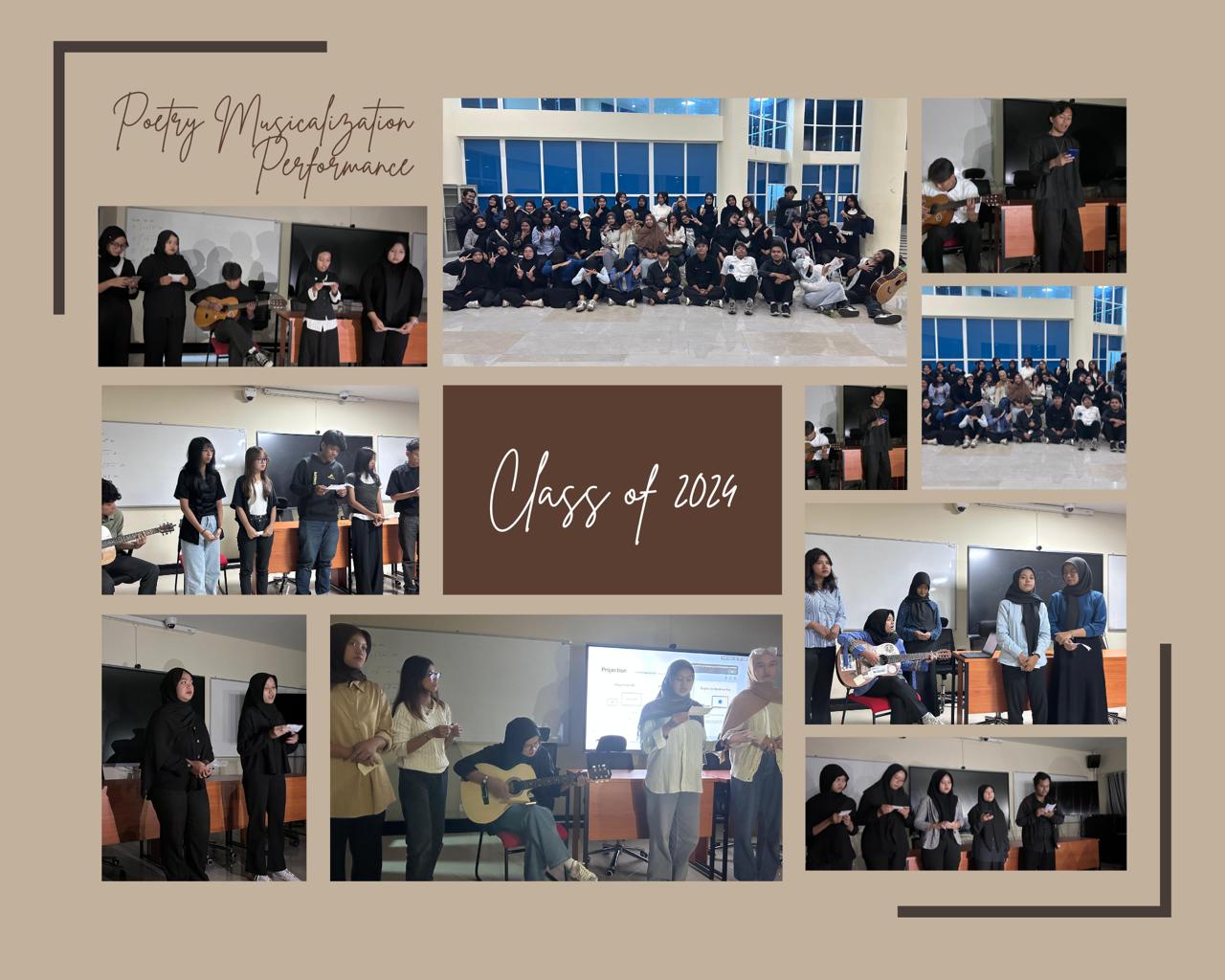
6 November 2025— The English Literature Study Program of UNESA Campus 5 successfully held a Poetry Musicalization Performance on Thursday, 6 November 2025, showcasing students’ creative interpretation of classical English poetry. The event reflects the program’s commitment to innovative learning methods and supports the Sustainable Development Goals (SDGs), particularly SDG 4 (Quality Education) and SDG 16 (Peace, Justice, and Strong Institutions), through the encouragement of expressive communication, cultural literacy, and collaborative creation.
The performance involved nine groups of students, each presenting a musical-dramatic adaptation of a selected poem from English and American literature. Among the works performed were “The Long Hill” by Sara Teasdale, which contemplates emotional perseverance and life’s quiet struggles, and William Shakespeare’s “Sonnet 18”, admired for its lyrical reflection on beauty and timeless remembrance. Emily Dickinson’s “Because I Could Not Stop for Death” was interpreted through a contemplative performance that emphasized the poet’s philosophical view toward mortality.
Other notable presentations included Percy Bysshe Shelley’s “Ozymandias”, critiquing the fleeting nature of power and human legacy; William Blake’s “The Tyger”, which explores awe and the mysteries of creation; and John Keats’s “When I Have Fears That I May Cease to Be”, expressing the urgency of artistic aspiration. Students also performed Edgar Allan Poe’s “Annabel Lee”, Rudyard Kipling’s “If—”, and William Wordsworth’s “The World Is Too Much with Us”, each demonstrating thoughtful interpretative choices in staging, music, and emotional delivery.
In addition to classical works, the event also featured original poems composed and performed by the students themselves. These original pieces conveyed personal reflections on identity, emotional growth, relationships, and the challenges of navigating young adulthood. The authenticity and emotional transparency displayed in these original works became one of the most appreciated elements of the program.
The lecturer of the course, Suyanti Fatma Umayfa, emphasized that the activity serves not only as an academic evaluation but also as a platform for developing literary appreciation, public communication skills, artistic confidence, and creative collaboration. “By allowing students to experience poetry beyond the text, through voice, movement, and performance, we encourage them to engage with literature in a living and meaningful way,” the lecturer stated.
English Literature students expressed the dedication and creativity demonstrated by musicalizing poetry. The program plans to continue supporting similar activities as part of its ongoing commitment to dynamic, student-centered learning that integrates critical thinking, cultural awareness, and creative expression.
