UNESA English Literature Students Turn Iftar Bazaar into Academic Hub through “The English Pantry”
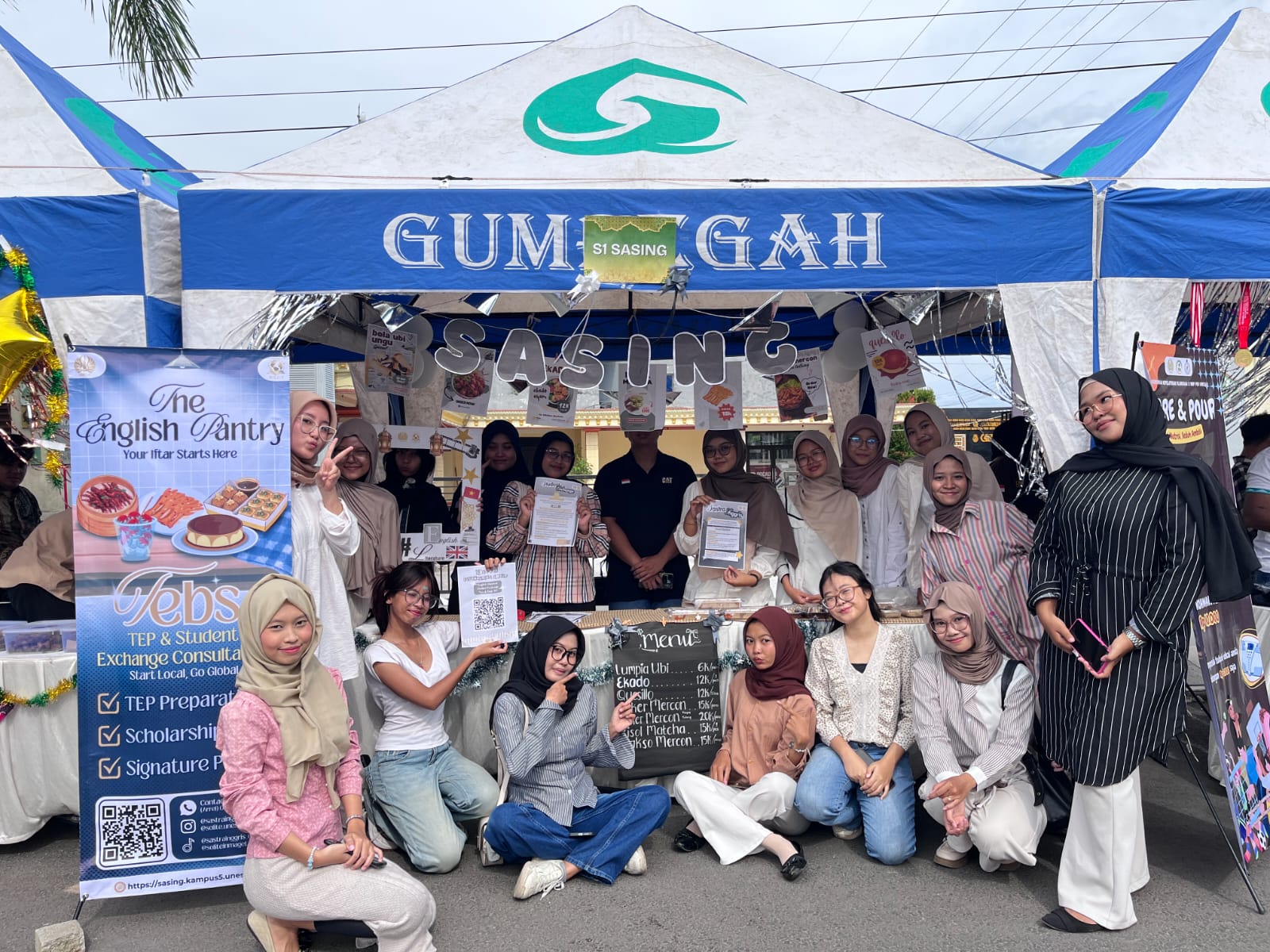
The atmosphere of the Ramadan evening at Universitas Negeri Surabaya (UNESA) Campus 5 on Friday, March 6, 2026 was filled with excitement, laughter, and the aroma of freshly prepared snacks as students from the English Literature program introduced a unique concept that blended culinary creativity with academic promotion. Through a stand called “The English Pantry”, members of the English Literature Student Association (HMP Sastra Inggris) transformed a simple bazaar booth into a lively space where food, education, and community engagement met.
The initiative was part of “Bukber Cozy,” a campus-wide communal iftar event held during the holy month of Ramadan at UNESA PSDKU Campus 5. The English Pantry served not only as a food bazaar but also as a platform to introduce the English Literature Study Program to the broader community, including visiting students from elementary, junior high, and senior high schools.
Unlike typical food stalls that simply sell snacks for visitors breaking their fast, The English Pantry carried a broader mission. The stand featured a variety of foods such as ekado, risol matcha, lumpia ubi ungu (purple sweet potato spring rolls), bakso mercon (spicy meatballs), and boneless chicken feet with chili sauce, offering visitors a diverse selection of affordable iftar treats.
However, what made the stand stand out was the way food was integrated with academic outreach. Surrounding the booth were promotional materials designed by the promotion division of the student association. Visitors could see banners and brochures explaining the opportunities offered by the English Literature program at UNESA Campus 5.
In addition, a special consultation corner was introduced under the concept TEBS (TEP and Student Exchange Consultations). Through this initiative, visitors could learn about English proficiency preparation programs, international exchange opportunities, and scholarship information while waiting for their food orders. This concept made the stand more than just a marketplace. It became an interactive learning space where conversations about academic futures occurred naturally among the bustle of a Ramadan bazaar.
The English Pantry was organized by members of the English Literature Student Association, consisting primarily of students from the 2024 and 2025 cohorts. Although it was a student-led initiative, the program was implemented under the guidance of the organization’s advisor, lecturers, and the coordinator of the English Literature study program.
The idea for the English Pantry and the TEBS concept was initially proposed by the advisor of the student association, who also serves as the program coordinator. Following this guidance, the student committee developed the concept into a concrete activity by preparing the bazaar stand, promotional media, and food products to be sold during the event.
Preparation took place several days before the event. Each division within the committee received specific responsibilities, ranging from product management and logistics to promotional design and visitor engagement. This collaborative planning process ensured that the stand would function both as a business venture and as an academic information center.
Through this structure, the activity also became a practical learning experience for students, allowing them to apply skills such as communication, teamwork, entrepreneurship, and event management in a real-world context.
The execution of the program followed a carefully designed plan. Students agreed to adopt the concept of “English Pantry,” which involved running a food bazaar using a jastip (personal shopper or consignment) system. Through this method, the team accepted food products from suppliers or partners to be sold during the bazaar, creating a collaborative business model.
Once the concept was finalized, the team began coordinating with product suppliers and preparing the list of foods to be sold. They also established a profit-sharing system with the consignors and arranged packaging that would appeal to visitors.
Each member of the team had a specific role in the operation. Some were responsible for managing online orders, others prepared the food displays, while the rest handled customer service at the booth. On the day of the event, the team set up the stand, arranged the food attractively, and actively promoted the products to visitors attending the iftar gathering.
The bazaar quickly became one of the most visited spots at the event, as guests were drawn by both the variety of snacks and the vibrant atmosphere created by the students.
Visitors noticed that the English Pantry offered something rarely seen in food bazaars: conversations about education and career opportunities.
One visitor, Vivi, shared her experience after visiting the booth. She highlighted how the stand provided not only delicious food but also meaningful interaction with students about academic opportunities.
According to Vivi, "A full iftar meal that nourishes your mind as well as your stomach is hard to come by. The UNESA English Literature students were incredibly productive yesterday. These are some of the things that truly stood out. The takjil, or breaking the fast, is usually the same, but yesterday's Risol Matcha and Lumpia Ubi Ungu were very special and ideal. Another winner are the boneless chicken feet, which are spicy but easy to eat.”
She also appreciated the affordability of the food and the educational aspect of the booth.“It's still reasonably priced, in my opinion, between 6,000 and 20,000 Rupiah. We could ask questions about the TOEFL while we wait for our orders to be prepared. Finding a food bazaar that is concerned about its patrons' academic futures is uncommon. You will therefore return home with a higher English score in addition to food.”
For Vivi, the experience represented something unusual: a bazaar that encouraged visitors to think about their educational journey while enjoying a meal.
The English Pantry also served as a reflection of the spirit of Ramadan, a time often associated with generosity, togetherness, and reflection. The bazaar created a welcoming space where students, lecturers, and members of the public gathered while waiting for the Maghrib call to prayer.
Music performances and campus entertainment further enhanced the festive atmosphere. As Vivi described, the performances made the wait for sunset feel shorter and more enjoyable.
The event demonstrated that campus activities during Ramadan can go beyond traditional gatherings. By combining food, education, and social interaction, the English Literature students managed to create a meaningful experience that resonated with visitors.
The success of The English Pantry shows how student organizations can design creative programs that contribute to both campus life and community engagement. What began as a simple bazaar stand eventually became a platform for promoting academic opportunities, entrepreneurial learning, and sustainable development values.
For the English Literature Student Association at UNESA Campus 5, the activity represents more than just participation in a campus event. It highlights the potential of students to create innovative initiatives that connect education with real-life experiences.
As visitors left the bazaar carrying their snacks and drinks, many also carried something else: new knowledge about English education opportunities and the possibilities that come with pursuing higher learning.
In the end, The English Pantry proved that a small booth at a Ramadan bazaar can become a powerful space where food nourishes the body, conversation stimulates the mind, and education opens doors to the future.